
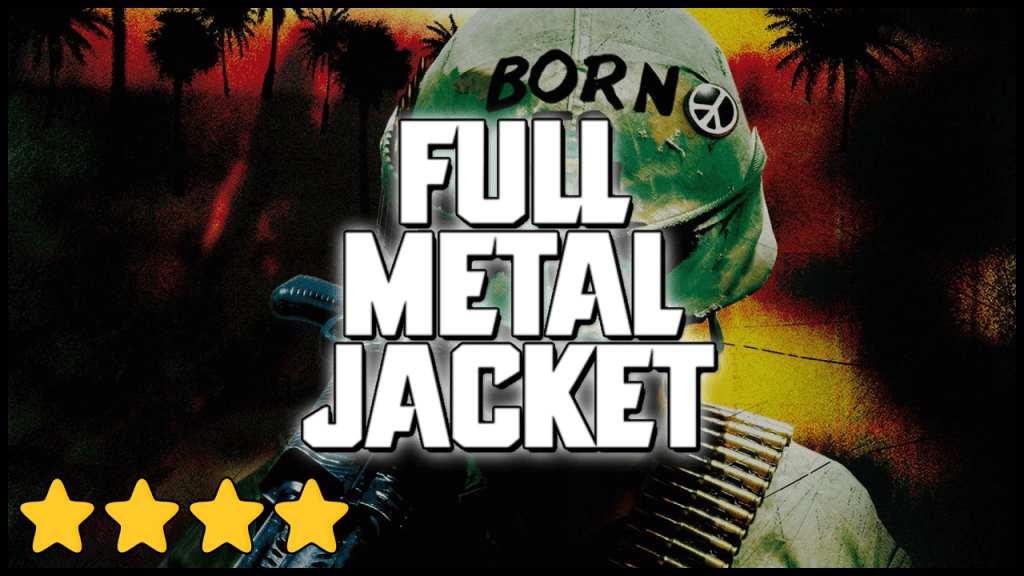
⭐⭐⭐⭐☆
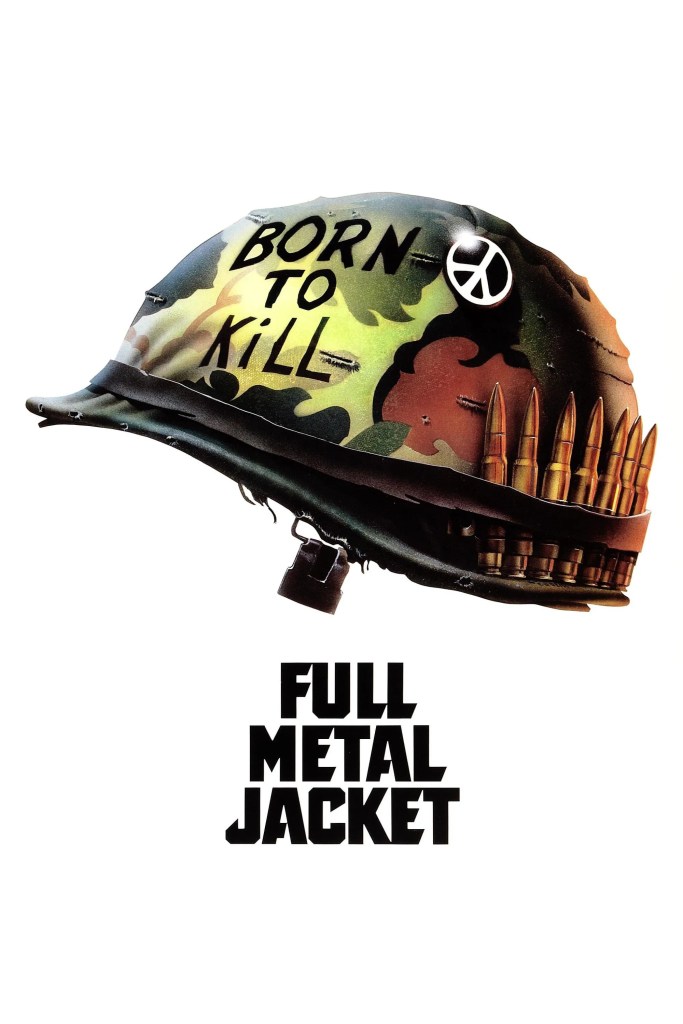
Full Metal Jacket is one of Stanley Kubrick’s most fascinating films for me — not because it’s flawless, but because of how sharply divided it is. This is a movie with two very distinct halves, and while they absolutely connect thematically, one side is undeniably stronger than the other.
The first half of the film is phenomenal.
The boot camp section is some of the most uncomfortable, gripping and extremely comedic filmmaking Kubrick ever put on screen. R. Lee Ermey as Gunnery Sergeant Hartman is iconic for a reason. His performance is relentless, terrifying, and strangely mesmerizing. Every insult, every barked order, every humiliation feels calculated to strip individuality away. It’s not just about discipline — it’s about dehumanization.
What really works here is the “creating a killer” atmosphere. You’re watching young men get broken down psychologically, molded into weapons, and pushed past their limits. Vincent D’Onofrio’s performance as Private Pyle is especially devastating. His arc is disturbing, tragic, and unforgettable, and the way Kubrick lets that tension slowly build makes the payoff hit incredibly hard.
Once the film shifts to Vietnam, it loses some of that razor-sharp focus.
The second half isn’t bad — not even close — but it feels less powerful. The battle sequences are well-shot, tense, and bleak, but they don’t carry the same emotional weight as the boot camp portion. Where the first half feels intimate and psychological, the war section feels more observational, like a straightforward war film. We’re watching the aftermath of that conditioning play out, rather than feeling deeply embedded in it.
That said, the movie does feel cohesive as a whole. The contrast is clearly intentional. The first half shows how soldiers are created; the second shows what they’re used for. Kubrick isn’t interested in glorifying combat — he’s showing the emptiness, confusion, and moral detachment that comes with it. The soldiers aren’t heroes or villains; they’re products of a system.
Matthew Modine’s Joker acts as a strong connective tissue between both halves, carrying the audience from training into war while retaining a sense of internal conflict. His perspective helps frame the film as less about action and more about identity and survival.
Final Rating: ⭐⭐⭐⭐☆
Full Metal Jacket is a powerful, unsettling war film anchored by one of the greatest first halves in cinema history. While the Vietnam portion doesn’t hit me as hard as the boot camp section, the film remains thoughtful, disturbing, and sharply directed. It’s not Kubrick at his most emotionally engaging — but it is Kubrick at his most brutally honest.


Leave a Reply