
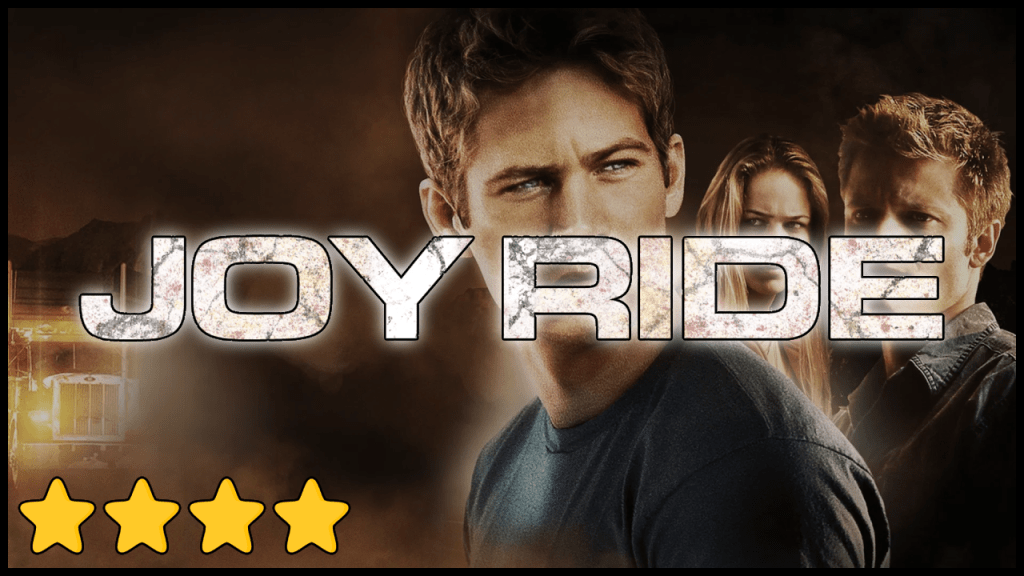
⭐ ⭐ ⭐ ⭐ ☆
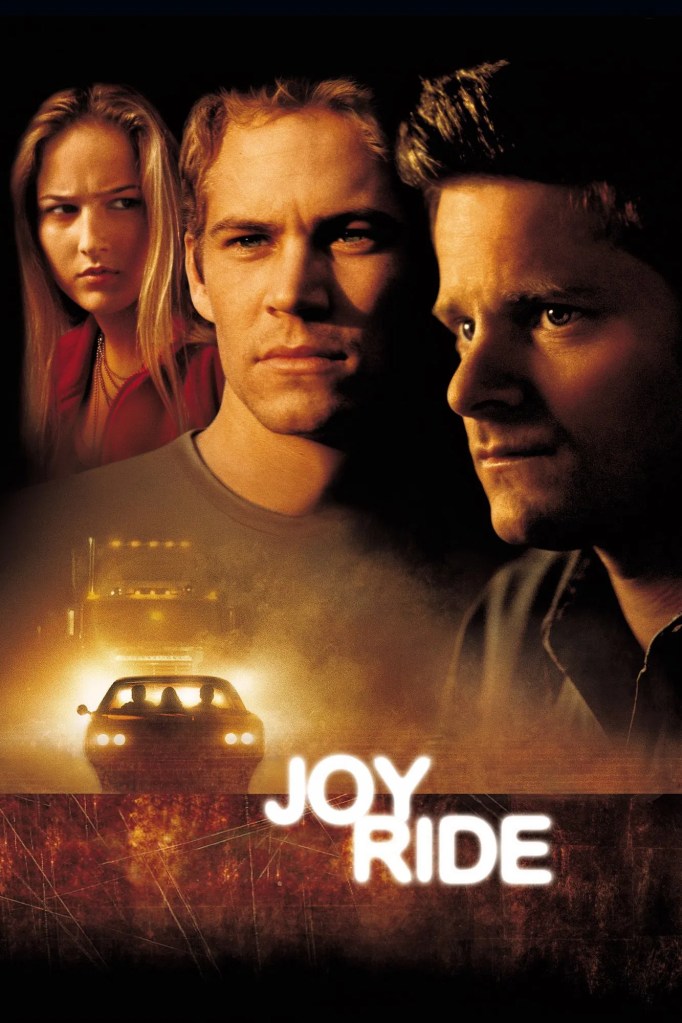
Directed by: John Dahl
Starring: Paul Walker, Steve Zahn, Leelee Sobieski
There’s something incredibly effective about a thriller that keeps things simple.
Joy Ride doesn’t rely on elaborate twists, overcomplicated mythology, or larger-than-life spectacle. Instead, it builds tension out of a situation that feels grounded and believable: two brothers on a cross-country road trip make a prank call over a CB radio, and the wrong person takes it personally.
That’s it. That’s the entire engine of the film.
Lewis (Paul Walker) is the straight-laced college student trying to reconnect with his childhood crush, Venna (Leelee Sobieski). His older brother Fuller (Steve Zahn) is impulsive, immature, and the one who turns boredom into a bad decision. When they invent a fake woman named “Candy Cane” and begin flirting with a lonely trucker over the radio, it feels like harmless fun. But when the trucker — who calls himself Rusty Nail — discovers he’s been played, the prank transforms into a relentless psychological pursuit.
What makes the film work is how quickly it moves from playful to threatening without ever feeling forced. John Dahl directs with restraint. He understands that suspense isn’t about showing everything. It’s about suggestion. It’s about the dread that creeps in when you realize someone unseen is watching you, tracking you, and getting closer.
Ted Levine’s voice performance as Rusty Nail is the film’s masterstroke. Calm, polite, almost friendly — until it isn’t. The decision to keep him largely unseen makes him far more terrifying. He isn’t a flashy slasher villain. He’s a presence. A voice crackling through static. A set of headlights in a rearview mirror. The unknown becomes the threat.
Paul Walker delivers a grounded performance as Lewis, anchoring the movie with believable fear and frustration. Steve Zahn brings energy and comic timing early on, which makes the tonal shift into darker territory even more effective. When the situation escalates, the humor evaporates naturally, leaving behind real consequences. Sobieski adds emotional stakes once she enters the picture, helping the story feel less like a boys’ adventure and more like a genuine fight for survival.
Visually, the film makes excellent use of isolation. Highways at night, empty truck stops, stretches of darkness broken only by headlights — there’s an inherent vulnerability to being on the road, and Joy Ride taps into that fear beautifully. The film doesn’t overuse jump scares. Instead, it builds a steady sense of unease that pays off in carefully staged confrontations.
What I appreciate most is that the movie never tries to overexplain its villain. There’s no tragic backstory. No attempt to justify the madness. Rusty Nail is dangerous because he is unpredictable and unhinged — and that unpredictability is enough.
It’s a lean, efficient thriller that understands pacing. It doesn’t drag. It doesn’t overstay its welcome. It builds tension, delivers payoff, and gets out.
As a fan of thrillers, this is exactly the kind of early-2000s gem that deserves more recognition. It proves you don’t need excess to create suspense — just a strong premise, committed performances, and smart direction.
Joy Ride may not reinvent the genre, but it absolutely executes it with confidence and control.
Final Rating: ⭐ ⭐ ⭐ ⭐ ☆
 MovieTalk+
Leave a comment