
⭐⭐⭐☆☆
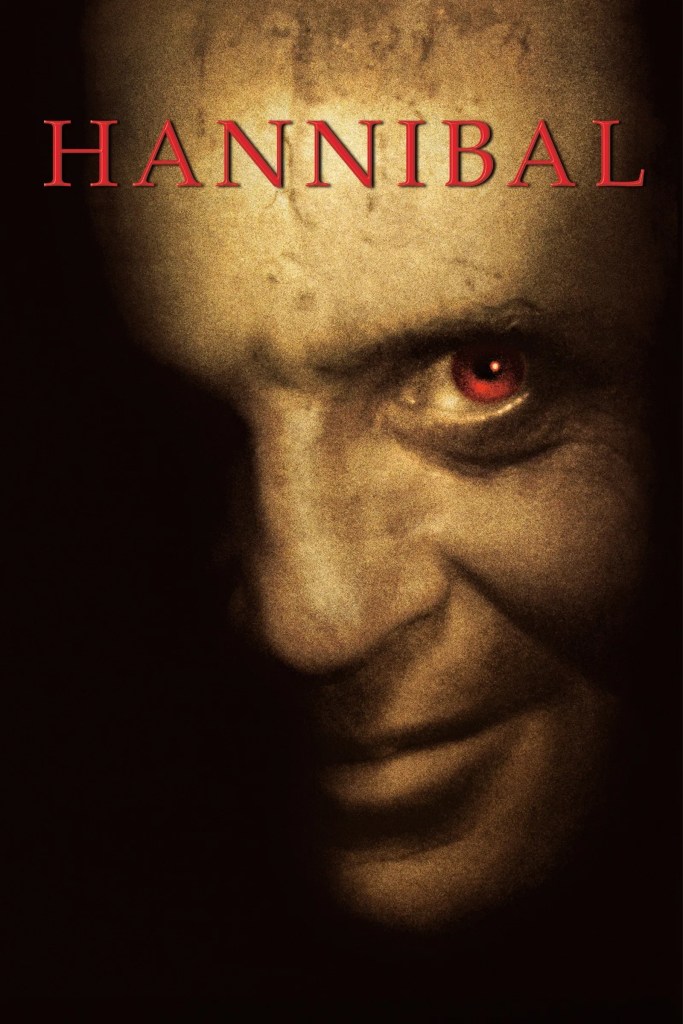
Watching Hannibal almost immediately after The Silence of the Lambs is a tough spot for any movie to be in. I always try to judge a film on its own terms, but when the predecessor is a straight-up masterpiece, expectations are naturally high — especially when this follow-up is directed by Ridley Scott. That doesn’t mean Hannibal is a bad movie. I actually enjoyed it well enough. It’s just a very different experience, dealing with familiar characters but taking them down a completely different path.
One of the biggest hurdles for me was the recasting of Clarice Starling. I really wish they had been able to bring Jodie Foster back. Julianne Moore is a great actress and clearly doing her best here, but this version of Clarice feels like a different character — and not just because of the change in actor. Her demeanor is noticeably altered, and that shift makes it harder to feel like this is a natural continuation of the woman we followed in The Silence of the Lambs.
On the other hand, Anthony Hopkins is just as magnetic as ever returning as Hannibal Lecter. I honestly don’t know if it’s the dialogue, his delivery, or a perfect combination of both, but I could listen to this man talk for hours and stay completely engaged. He has such a commanding presence that every scene he’s in immediately becomes more interesting. The film leans heavily into a battle of wits between Hannibal and pretty much everyone else, and it’s written in a way that makes you believe he’s always one step ahead.
Gary Oldman also deserves credit here. Completely unrecognizable, he gives a strong performance that adds a different kind of villainy to the story — one that feels more grounded and spite-driven compared to Hannibal’s calculated elegance.
For me, though, the movie doesn’t really kick into gear until about an hour in. The first half is largely buildup, with new characters slowly figuring out who Hannibal is. As a viewer who already knows exactly who he is and what he’s capable of, I found myself wishing the movie would get to the point a bit quicker. Once it does, things become far more engaging.
I went into Hannibal already aware of the infamous Ray Liotta scene, but I had no idea how it would be contextualized. What surprised me is how the film positions Hannibal — he’s not a good guy by any stretch, but he’s also not quite framed as the main villain either. He’s someone who absolutely needs to be caught, yet the movie makes you want to see him operate before that happens. And speaking of surprises… can we talk about the boars? Wow. That moment escalates fast. I do think it moves a little too quickly, but the brutality of it works, especially when it’s aimed at characters who genuinely deserve what they get.
At the end of the day, Hannibal is a clear downgrade from what came before, but it’s not without merit. It has strong performances, memorable moments, and a confidence that keeps it watchable even when it stumbles. The tone and execution are wildly different from The Silence of the Lambs, but if you’re doing a full Hannibal marathon, this film still earns its place.
Final Rating: ⭐⭐⭐☆☆
Hannibal doesn’t reach the heights of its predecessor, but it offers enough style, performances, and dark intrigue to remain an engaging — if uneven — continuation of the story.
 MovieTalk+
Leave a comment